
Macujo Method Steps: Complete Hair Cleansing Guide
That feeling when your entire future hinges on a single lab report.
Your job. Your CDL. Custody of your kids. Your probation officer’s nod.
All hanging in the balance because of a hair test that can see back 90 days. Maybe longer.
It feels like a trap. You’ve done the right thing. You’ve quit. But your hair is a permanent record of the past, and now you’re slammed with a test notice.
So you start searching. Desperately.
And you keep landing on the same phrase: the Macujo method steps.
It’s the nuclear option whispered about in forums. The multi-step chemical assault designed to obliterate drug metabolites from deep inside your hair shaft. The original method popped up in the late ‘90s from someone just like you, backed into a corner.
Then there’s Mike Macujo. He took that original blueprint and engineered it further around 2015, claiming a higher success rate for all drugs, not just weed.
This guide is your troubleshooting manual. We’re not just listing steps. We’re diagnosing what goes wrong, why it hurts, and how to navigate this fiddly, high-stakes process without losing your hair—or your mind.
Let’s break it down.
Symptom 1: Burning Scalp Without Results—Is Your Macujo Method Failing?
So you’re doing it.
You’re gritting your teeth through the burn. Your scalp feels raw, maybe even looks a bit red or scabby along the hairline.
And after all that pain, that fiddly, hours-long chemical assault… you’re still terrified it’s not working.
Here’s the brutal truth.
That burning sensation? It’s common. Very common.
But here’s the part nobody tells you: the pain is not a reliable sign the method is working.
It’s often just a sign you’re doing it wrong.
Think of it like this. You can get a terrible sunburn from sitting outside all day with no sunscreen. That’s pain. But it doesn’t mean you got a good tan. You just got damaged.
Same principle here.
The Macujo method is a precise chemical formula. Each step has a job. The vinegar is meant to soften the cuticle. The astringent strips surface gunk. The detergent is a powerful surfactant.
But if you skip steps, use the wrong products, or don’t protect your skin… you’re just pouring acid on your head.
You’re getting all the atrocious side effects with none of the payoff.
The root cause of failure is almost always in the execution. A shortcut here. A product substitution there. Not enough cycles.
You’re enduring the grind, but the process is flawed.
So if the searing pain isn’t the signal you’re looking for… what is?
If the pain isn’t a sign it’s working, what is the correct process?
Troubleshooting Macujo Method Steps and Ingredients: Common Errors and Fixes
So if the pain isn’t a sign it’s working… what is the correct process?
It’s a step by step execution that leaves no room for error. Get this right, and the pain has a purpose. Get it wrong, and you’re just torturing yourself for no reason.
Here’s the exact macujo method steps walkthrough. Follow it to the letter.
The Exact Ingredient List (No Substitutions)
First, gather your gear. Using the wrong product is the fastest way to fail.
- Old Style Aloe Toxin Rid Shampoo (the original formula—not the new Nexxus version, that’s useless).
- Clean & Clear or Neutrogena Clear Pore astringent (2% salicylic acid).
- Heinz White Vinegar (5% acetic acid).
- Arm & Hammer Baking Soda.
- Original Liquid Tide Detergent. (Yes, the laundry stuff).
- Zydot Ultra Clean (for test day only).
- Protective Gear: Rubber gloves, Vaseline, shower cap, fresh towels.
The 9-Step Fix: Your Macujo Method Step by Step
This is the corrective sequence. The order is critical.
Step 1: Wash hair thoroughly with Old Style Aloe Toxin Rid Shampoo. Rinse, towel dry.
Common Error: Using a different shampoo here. Fix: This isn’t a regular wash; it’s the first cuticle opener.
Step 2: Make a paste of baking soda and warm water. Massage into hair for 5-7 minutes. Rinse, towel dry.
Common Error: Making it too runny. Fix: Aim for a thick, gravy-like paste.
Step 3: Saturate hair with salicylic acid astringent. Massage for 5-7 minutes. Let it sit for 30 minutes. Rinse.
Common Error: Not waiting the full 30 minutes. Fix: Set a timer. This soak is non-negotiable.
Step 4: Use a very small dab of Liquid Tide. Scrub hair for 3-7 minutes. Rinse thoroughly.
Common Error: Using too much Tide, causing a foaming, irritating mess. Fix: A dime-sized amount max. It’s a surfactant, not a shampoo.
Step 5: Wash again with Aloe Toxin Rid Shampoo. Rinse.
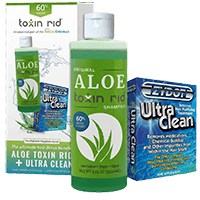
- Highly effective for drug tests
- Effective for heavy users
- Suitable for dreadlocks and dark hair
- Used in Macujo and Jerry G methods.
Step 6: Saturate hair with vinegar. Massage in. Only pat dry—do not rinse.
Common Error: Rinsing out the vinegar. Fix: It needs to stay in to lift the cuticle scales.
Step 7: Immediately re-apply the salicylic acid astringent. Massage. Let sit for 30 minutes. Rinse.
Common Error: Skipping this second acid soak. Fix: This double-hit is what obliterates the metabolites.
Step 8: Apply another small dab of Liquid Tide. Scrub for 3-7 minutes. Rinse thoroughly.
Step 9: Final wash with Aloe Toxin Rid Shampoo to remove any chemical smells.
That’s one complete session.
How Many Washes? The Macujo Method Calculator
This isn’t a one-and-done deal. You need multiple cycles spaced 8-10 hours apart.
- Light Use (a few times a month): 3-8 total cycles.
- Moderate Use (weekly): 4-10 total cycles.
- Heavy, Chronic Use (daily): 10-15+ total cycles.
On test day, if you’ve used in the last 14 days, do a full session within 2 hours before your test.
The Role of Tide Detergent
Don’t be scared of it. Tide is the heavy-duty surfactant in this formula. It’s what strips the residual gunk the acids and vinegar lift. But it’s fiddly—too much and you’ll irritate your scalp to oblivion. A tiny dab is all you need.
This is the macujo method steps walkthrough. It’s brutal, it’s fiddly, but when executed with this precision, it works. The common errors aren’t mysteries—they’re just shortcuts people take that obliterate their chances.
So you have the map. But what if you’ve done all this and still see red flags? That’s next.
Real-Time Red Flags: Auditing Your Macujo Method Execution
So you’ve got the map.
But what if you’ve done all this and still see red flags?
That’s next.
A real-time audit.
Your 7-Point Diagnostic Checklist
Run through this list during the process. Not after.
This is how you course-correct on the fly.
1. The Vaseline Check (Pre-Step 1)
Did you glob on the Vaseline?
We’re talking hairline, ears, neck, forehead.
If you skip this, you’re not just risking failure.
You’re begging for a chemical rash that’ll scream at you for days.
A proper barrier feels thick and obvious.
If it’s not there, stop. Apply it. Now.
2. The Astringent Tingle (Steps 3 & 7)
When you massage in that salicylic acid astringent, you should feel a strong, active tingle.
It’s working.
But listen close.
Tingle is okay. Blaze is not.
If your scalp starts blistering or feels like it’s on fire, that’s your body’s stop sign.
Rinse immediately. You’ve got too much acid or left it on too long.
The goal is 30 minutes of controlled exposure, not a medical emergency.
3. The Vinegar Soak Feel (After Step 2)
After the Heinz vinegar soak, your hair will feel different.
Run a sanitized comb through it.
It should feel squeaky clean, almost stripped.
But it should not feel matted, glued, or like straw.
If it’s a tangled, hopeless mess, you’ve overdone the acids.
The cuticle is blown open.
This is a major red flag for breakage and ineffective cleansing.
4. The Tide Lather Test (Steps 4 & 8)
This is the fiddly part.
A tiny dab of Tide.
When you scrub, you should feel abrasive grit, like you’re scouring a pan.
The lather should be minimal and thin.
If you see big, foamy suds, you used too much.
Excess soap means residue that can mask toxins or irritate your scalp further.
Rinse until the water runs completely clear.
5. The Timing Trap
This method lives and dies by the clock.
Each astringent step needs a full 30-minute sit.
Set a timer. Don’t guess.
“About half an hour” is how you obliterate your chances.
Too short, and the cuticle doesn’t open enough.
Too long, and you risk serious burn.
Precision is gangster.
6. The Scalp Pain Spectrum
Some discomfort is part of the deal.
You’re using harsh chemicals. It’s gonna sting.
Acceptable: General soreness, dryness, itching, redness.
Unacceptable: Sharp, localized pain. Open sores. Bleeding.
If you hit the unacceptable zone, you’re causing damage that can alert the lab and harm you.
The method is brutal, but it shouldn’t leave you wounded.
7. The Contamination Control
You’re using a clean towel every time, right?
And a new or sanitized comb?
If you dry your “cleaned” hair with the same towel you used after the first acid wash, you’re just re-depositing the toxins you worked so hard to lift.
Same with a dirty comb.
It’s a fiddly detail, but it’s the difference between a clean slate and a failed test.
The Bottom Line
This audit isn’t about comfort.
It’s about control.
You’re managing a chemical reaction on your head.
Watch for these signs.
Adjust in real-time.
Your livelihood is on the line.
Do it right.
- Highly effective for drug tests
- Effective for heavy users
- Suitable for dreadlocks and dark hair
- Used in Macujo and Jerry G methods.
Identifying the Original Macujo Method Amidst Internet Variations
So you’re online.
You’re searching for the Macujo method steps.
And you’re getting slammed with a million different versions.
One forum says use this vinegar.
A YouTube comment swears you can swap the Tide for that dish soap.
Another “Mike’s method” variation insists on a secret ingredient only they know.
It’s chaos.
And it’s designed to make you fail.
Here’s the juicy truth you need to cut through the noise.
The original Macujo method is a specific, locked-down sequence.
It started in the late ’90s from a Testclear customer—not some corporate lab.
It uses exact products: white vinegar, Clean & Clear astringent, Old Style Aloe Toxin Rid shampoo, liquid Tide detergent, and a Zydot Ultra Clean on the day of your test.
That’s the core.
That’s the gangster formula people have been using for decades.
Then you have Mike’s Macujo method.
This is an enhanced version Mike Macujo perfected around 2015.
It adds a baking soda paste step and often specifies the Macujo Aloe Rid shampoo variant for what they claim is deeper penetration.
The problem?
Every forum warrior and their cousin has a “better” version.
They tell you to skip steps.
They tell you to use a cheaper shampoo.
They tell you to add random household chemicals.
This is how you torch your scalp for nothing.
The data from failed test stories is clear.
Deviations from the exact sequence, timing, or using non-specified products are the number one reason people post “Macujo method failed” rants.
Substituting a generic astringent for the specified Clean & Clear?
Higher failure rate.
Using a different “detox” shampoo because it’s cheaper?
You’re gambling with your future.
And the biggest scam of all?
Counterfeit Old Style Aloe Toxin Rid.
The market is flooded with fakes.
You buy a bottle thinking you’re getting the proven formula.
You’re actually buying colored water.
That’s not just a waste of money—it’s a direct path to a positive test result.
So what do you do?
You go to the source.
Mike Macujo himself runs the main site with the verified steps.
If you’re confused, you can find his contact info and support there.
Don’t trust a third-hand forum post when your job is on the line.
A quick note on cost.
Yes, the real Aloe Rid is an investment.
But look for a valid Macujo coupon code from the official site.
A small discount is better than blowing cash on a fake bottle that guarantees failure.
The core steps are proven.
The variations are a minefield.
But here’s the kicker…
Even when you follow the “correct” steps perfectly, sometimes it still doesn’t work.
That’s a different problem.
And it’s the next red flag we need to diagnose.
When the Macujo Method Fails: Diagnosing Ineffective Results and Next Steps
You followed the steps.
You endured the burn.
And you still failed the test.
That’s the gut-drop moment.
The panic is real.
So let’s diagnose what went wrong.
The common culprits are usually execution errors.
Based on Macujo method reviews, these are the usual suspects:
- Not enough washes. This is the big one. Light users might get away with 5-8 cycles. But if you’re a moderate or heavy user, you likely need 10-15+ full cycles over several days. Stopping too soon is a guaranteed failure.
- Crap products. Using old, pantry-stale Heinz vinegar? That’s a problem. Using a random “clarifying” shampoo instead of the Macujo Aloe Rid shampoo? That’s a massive problem. The specific formulation matters.
- Rushing the soak. Skipping the 10+ minute dwell time for the Aloe Rid? The propylene glycol needs time to penetrate and chelate. Rushing it makes the whole step pointless.
- Poor application. Missing sections of hair, especially near the scalp, leaves entire zones of that critical 1.5-inch sample untouched.
But here’s the harder truth…
Sometimes, it’s not a mistake.
It’s a limitation.
The method’s effectiveness has a ceiling.
And that ceiling is lowest for heavy, chronic users.
How long does the Macujo method last? It doesn’t “last.” It’s a top-down cleanser. It can’t magically reverse metabolites bound deep in the hair shaft from months of daily use. For a light, occasional smoker, the method can be gangster. For a daily dabber or someone with hard drug history… the standard process might not be enough to obliterate the evidence.
The Macujo reviews tell this story. You see the 90%+ success claims for THC. But dig into forums, and you’ll find the failures. The user who did 20 washes and only saw a 15% reduction. The heavy smoker who did everything right and still failed because the toxins were just too embedded.
So what’s the next step?
If the core method has limits, what actually makes it work at a deeper level?
And what’s the escalation path when the standard playbook fails?
That’s the critical question.
And the answer involves understanding the science… and knowing when to bring in a proven specialist.
The Science of the Macujo Method: How It Aims to Remove Drug Metabolites
So what’s actually happening on a chemical level when you’re dumping vinegar and Tide on your head?
Let’s break down the theory.
Your hair isn’t just a dead strand. It has layers. The outer cuticle is like overlapping shingles on a roof. Underneath is the cortex. That’s where the real trouble is. Drug metabolites—THC, cocaine, whatever—don’t just sit on the surface. They get incorporated deep into the cortex, binding to the keratin proteins and melanin in your hair as it grows.
The Macujo method is a brute-force chemical attack on this structure.
Step one is the acid bath. The acetic acid in vinegar is meant to lower the pH. This can alter the hair’s morphology and start to loosen the keratin structure. Think of it as softening up the fortress walls.
Step two is the alkaline counter-attack. Laundry detergent (like Tide) is highly alkaline. This raises the pH dramatically, which is designed to lift and swell the cuticle scales. The goal? To crack open those roof shingles and create pathways deeper into the cortex.
Then come the surfactants and cleansers. This is the cleanup crew. The detergents and specialized shampoos contain surfactants. These molecules form tiny spheres called micelles that surround and lift oily substances—like those drug metabolites—from the hair shaft. Some formulas also use propylene glycol, a penetration enhancer, to help ferry cleansing agents deeper.
The whole process is a deliberate pH rollercoaster. Acid, then alkaline, then cleansing. The theory is that this sequence progressively weakens the hair’s defenses, destabilizes the bonds holding the metabolites, and washes the loosened material away.
But here’s the raw truth.
There are no formal clinical studies that validate the Macujo method as a guaranteed pass. Zero. The science is inferred from what we know about hair chemistry and cosmetic damage.
We do know that severe chemical treatments—like bleaching—can damage the cuticle and reduce drug concentrations by 40-80%. That proves structural damage can release drugs. The Macujo method attempts to achieve a similar, targeted disruption without completely melting your hair.
It’s a logical, chemical rationale. Not a proven clinical one.
So when you’re doing those washes, you’re not following a lab-verified protocol. You’re executing a theoretical assault on your hair’s biochemistry, hoping to open enough doors and flush out enough evidence before the lab tech snips that sample.
The question isn’t just if it can work. It’s whether the standard assault is gangster enough for your specific level of contamination. And that’s where the science meets the real-world grind.
Safety First: Protecting Your Hair and Scalp During the Macujo Method
Your scalp is on fire.
It’s red, flaking, and every wash feels like you’re pouring salt into a wound. Worse, you look in the sink and see hair. A lot of hair. Clumps of it.
This isn’t just pain. This is a test failure in slow motion.
If you walk into that clinic with a scalp that looks like a chemical burn battlefield—or with bald patches where hair used to be—you’re handing the lab tech a giant red flag. They’re trained to spot damage. They can reject a sample or flag it as tampered. All that agony, all that money, for nothing.
The mistake? You treated this like a simple cleaning. It’s not. It’s chemical warfare on your own hair follicles. And you went in without armor.
Here’s how to fix that.
Stop the Bleeding (Literally)
First, do a patch test. Dab a bit of the vinegar or salicylic acid mix on your inner elbow. Wait an hour. If it’s a fiery red mess, your skin is screaming “NO.” Listen to it. You might need a milder acid or shorter contact times.
Next, gloves are non-negotiable. This isn’t about being a wimp. It’s about keeping your hands from getting burned so you can actually apply the stuff properly. And get a barrier cream—like a thick zinc oxide diaper rash cream—and smear it all over your forehead, ears, and neck. This creates a protective moat, stopping acids and detergents from creeping down and giving you chemical burns.
The Healing Rule
More isn’t always better. Slamming your scalp with 15 washes back-to-back is how you get sores and permanent damage. You need a healing window.
Do a wash cycle. Then give your scalp at least 24 hours to recover. Let the redness fade. Let the stinging stop. If you have open sores or major flaking, you must wait until they heal. Continuing is how you get infections and lose hair permanently.
This isn’t an optional extra. This is the method.
A shredded, inflamed scalp is a compromised barrier. It can’t handle the treatment, and it screams “tampering” to the lab. Protecting your scalp isn’t just about comfort—it’s about ensuring the Macujo method can actually do its job without getting you disqualified before you even walk in the door. The most gangster detox plan in the world is useless if your scalp surrenders first.
Escalating to Old Style Aloe Toxin Shampoo for Reliable Macujo Results
But here’s the thing…
If you’re doing all that and still getting a sore scalp with zero results, you might be hitting the limits of pure DIY.
The macujo aloe rid shampoo step isn’t just about lathering up with whatever’s in your shower. Generic shampoos clean the surface. They don’t get deep.
This is why you escalate.
Introducing Old Style Aloe Toxin Rid.
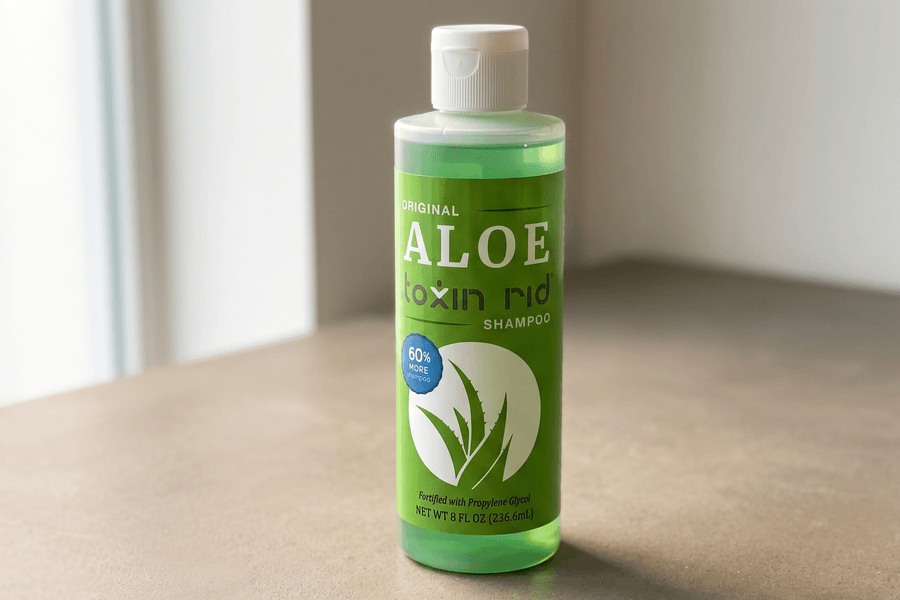
Think of it as the heavy-duty, professional-grade tool for this specific job. It’s not a magic bullet. It’s a high-performance surfactant shampoo designed for one purpose: deep hair shaft cleansing.
So what makes it different from the cheap stuff?
It’s all in the formula. While your regular shampoo has nice-smelling conditioners, this one is built to penetrate.
- Propylene glycol acts as a penetration enhancer. It helps the cleansing agents get deeper into the hair structure.
- EDTA is a chelating agent. It grabs onto metal ions and contaminants locked in your hair.
- Sodium thiosulfate works as a reducing agent to neutralize and help flush out bound compounds.
This isn’t about just washing your hair. It’s about a targeted chemical assault on embedded metabolites.
But I can just use vinegar and Tide, right?
Sure. And you might get lucky. But for a high-stakes test? “Might” is a terrifying word.
The macujo aloe rid formula is the difference between scrubbing a stain with a dishcloth and using a specialized solvent. One might work. The other is engineered to work.
Let’s talk about the elephant in the room: the cost.
Yeah, it’s not cheap. A bottle runs from $130 to $235. That’s a tidy sum.
But let’s reframe that. What’s the cost of failing? Losing a CDL license? A dream job? Custody? Suddenly, $200 looks less like an expense and more like insurance.
You’re not buying a shampoo. You’re buying reliability when you have no margin for error.
Where to find macujo aloe rid shampoo near me?
Here’s the crucial part: you probably won’t find it at Walmart or CVS. It’s sold online, primarily through TestClear.
And you must be careful. Amazon, eBay, TikTok Shop… they’re flooded with counterfeits. Look for an intact seal, a lot number, and the right thick, green gel consistency. If the price seems too good to be true, it’s a fake. Don’t gamble on a knock-off for this.
The Power Combo: Macujo Aloe Rid + Zydot Ultra Clean Shampoo
The proven, reliable sequence uses this shampoo as the core workhorse during your multi-day prep. Then, on test day, you use Zydot Ultra Clean—a separate three-packet kit—for a final cleanse.
The Old Style Aloe Toxin Rid does the heavy lifting over days. The Zydot handles the final surface and near-surface cleanse. It’s a one-two punch.
This macujo shampoo is required for reliability because it addresses the core problem: deep, embedded toxins. Household items are a gamble. This is a calculated, proven step.
But for some cases—even this powerful combo isn’t the final answer. Especially if they’re not taking hair from your head…
- Highly effective for drug tests
- Effective for heavy users
- Suitable for dreadlocks and dark hair
- Used in Macujo and Jerry G methods.
Advanced Troubleshooting: Body Hair, Hair Types, and Preventing Re-Contamination
But what if the tester doesn’t go for your head?
What if they roll up your sleeve… or ask you to lift your arm?
This is where panic sets in. And it’s a valid fear.
The Body Hair Problem
Here’s the deal with body hair.
It grows slower. Much slower.
This means it holds onto drug metabolites for longer—a detection window that can stretch up to a year. That’s a huge problem if you used anything in the last 12 months.
The standard Macujo cleanse protocol is built for the faster-growing hair on your head. For body hair from your arm, leg, or chest, you need to escalate.
Think more washes. Longer soak times.
You’re fighting a longer exposure history.
A full body detox approach means treating every potential sample site. Don’t just focus on your scalp. If there’s a chance they’ll take it from your leg, you need to cleanse that leg hair with the same ferocity.
Thick, Curly, or Dreadlocked Hair? Adjust Your Attack.
Your hair’s structure changes the game.
Tightly curled or coiled hair, common with many ethnic hair types, can trap metabolites deeper within the bends of the shaft. Dreadlocks are a fortress.
For these hair types, the standard soak-and-rinse might not cut it.
You need to:
- Section meticulously. Work in small, manageable parts to ensure every strand is saturated.
- Extend your soak times. Let the acidic mixture and the macujo shampoo work longer to penetrate the structure.
- Be patient. This is fiddly work. Rushing it leaves pockets of contamination.
High-porosity hair (often chemically treated or damaged) absorbs things faster—including your cleaning agents. But it can also lose incorporated drugs more easily during rigorous washing. It’s a double-edged sword. The key is controlled, repeated application.
The Silent Killer: Re-Contamination
You can do everything right… and fail because of a old baseball cap.
Re-contamination is sneaky. Metabolites don’t just live in your hair. They lurk in:
- Hats, beanies, and headbands you wore during use.
- Pillowcases and sheets you slept on.
- Jacket hoods and collars.
- Even sweat carrying old metabolites from your scalp can redeposit them onto freshly cleansed hair.
Your comprehensive Macujo detox protocol isn’t complete until you address your environment.
Wash or quarantine anything that touched your hair in the months you were using. Hot water, strong detergent. Treat your personal items like they’re part of the sample.
And on test day? Be mindful. Don’t let a sweaty workout or an old hoodie sabotage days of weaponized work.
A Note on Other “Detox” Avenues
You’ll see chatter online about macujo detox mouthwash for saliva tests or internal macujo cleanse drinks.
These are entirely different battles.
A mouthwash won’t touch metabolites locked in your hair shaft. A drink won’t strip your follicles. They address different testing methods. For a hair test, your focus must remain on physically and chemically cleansing the hair itself—whether it’s on your head or your body.
The core principle holds: meticulous, repeated chemical cleansing is your only reliable path. And when the stakes are this high—when your job, your license, or your freedom is on the line—reliability isn’t a luxury. It’s the entire point.
Real-World FAQs: Correcting Common Mistakes About the Macujo Method
Can I use apple cider vinegar instead of Heinz white vinegar?
Nope. This is a huge mistake. The original method specifies Heinz white vinegar for a reason. Its specific acidity level is crucial for opening the hair cuticle. Apple cider vinegar or other types don’t have the same chemical profile. Using them is like bringing a squirt gun to a flamethrower fight. It won’t penetrate properly, and you’ll waste your time.
How many washes do I actually need?
A single wash is a joke. For any shot at success, you’re looking at a minimum of 5 to 7 full cycles. If you’re a heavy, chronic user, you need more. Think 10+. Each wash is a battle to strip another layer of metabolites. Skipping sessions because your scalp hurts is the fastest way to fail.
Will this work if I just smoked yesterday?
Absolutely not. The Macujo method cleans the hair that’s already grown. It doesn’t create a magic forcefield. You need meaningful abstinence time—at least a couple of weeks—for new, clean hair to grow in. The method cleans the old hair shaft. If you’re still using, you’re just re-contaminating yourself. Simples.
I’m bald. Can they still test me?
Yes. And this is a brutal curveball. If you shave your head, the lab will simply take hair from your body—legs, arms, armpits, chest. Worse, body hair has a much slower growth rate, so it can show drug use from way further back than 90 days. Shaving your head is not a loophole; it’s a trap.
Does bleaching my hair work just as well?
No. This is a costly myth. Bleaching damages the outside of the hair, but it doesn’t obliterate the metabolites locked inside the cortex. Labs see bleached hair all the time. It might raise a red flag for tampering, but it won’t guarantee a clean result. It’s a fiddly, damaging process that doesn’t solve the core problem. If you are looking for more information on how to pass hair follicle drug test scenarios, consistency is more effective than bleaching.
How do I know if my Old Style Aloe Toxin Rid is real?
This is critical. The market is slammed with counterfeit bottles. Fakes are everywhere, especially on random marketplace sites. The only way to be sure is to buy from a verified, reputable source with a proven track record. A fake bottle is just expensive shampoo. It won’t have the deep-cleaning formulation needed to work with the method’s chemistry. Don’t luck out; be sure.
Making the Right Choice: A Decision Framework for Passing Hair Drug Tests
So you’ve seen the chaos.
The burning scalps. The conflicting advice. The fiddly steps and the fake bottles.
But now it’s time to cut through the noise.
It’s decision time.
The right path isn’t about what worked for some random commenter. It’s about your specific situation. Get this wrong, and you’re just playing with fire.
Here’s the simple framework.
The 3-Factor Decision Check
Ask yourself these three questions. Be brutally honest.
- Time: Do you have more than 5 days until your test?
- Stakes: Is this a “nice-to-have” job, or is it your CDL, your custody hearing, your freedom on the line?
- User Profile: Were you a heavy, daily, or long-term user of anything harder than occasional weed?
Your Path, Based on Your Answers
Choose the DIY Macujo Method IF:
- You have time (5+ days to do multiple cycles).
- The stakes are manageable (you could potentially re-apply or it’s not life-altering).
- You’re a light or occasional user.
- You can tolerate the pain and physical damage.
It might work. The reported success rate is high for THC. But “might” is the operative word. You’re accepting the risk of scalp damage for a chance at a pass.
Escalate to Macujo + Old Style Aloe Toxin Rid IF:
- Your time is limited (under 5 days, or a random test just dropped).
- The stakes are sky-high (career, family, legal standing).
- You’re a heavy, chronic, or hard-drug user.
- You need the most reliable, proven path available.
This isn’t about buying a magic bottle. It’s about choosing the right hair follicle detox shampoo as your core weapon. The method opens the hair shaft; the proven formula does the deep cleaning. It’s the one-two punch that gives you the best odds when failure is not an option.
The bottom line?
If your future is on the line, don’t luck out. Don’t hope the vinegar and baking soda route obliterates months of metabolites. Invest in the proven tool designed for the job.
Choose your path.
Execute the steps with gangster precision.
Walk into that test with your head held high.
You’ve got this.